
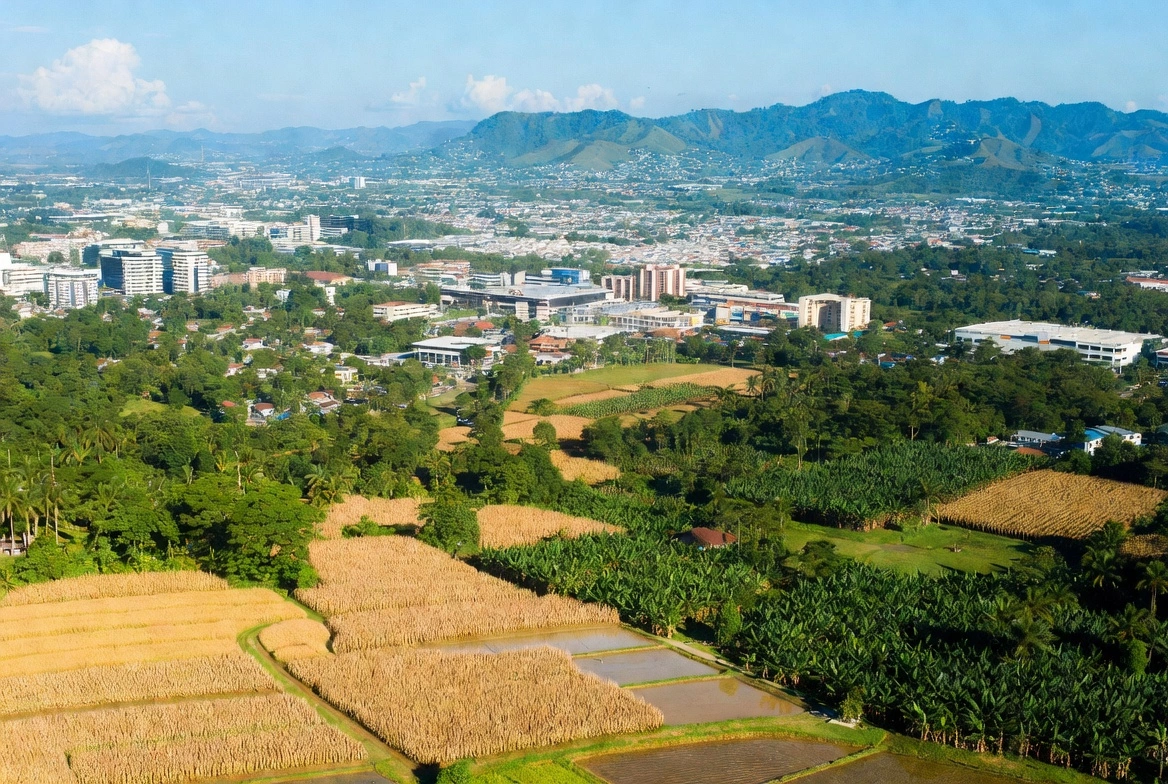
Valencia City is where Bukidnon does business. Yes, the “City of Golden Harvest” nickname comes from its sprawling farms, but the real story is the infrastructure built to support them. With over 223,000 residents across 31 barangays, it hits a sweet spot: the scale of a regional hub, but with the land availability and accessible pace of a secondary city.
Why Invest in Valencia City?
Valencia is the commercial anchor of Bukidnon. It pulls in shoppers and workers from SOCCSKSARGEN and BARMM, backed by a ₱2.725 billion budget in 2026. The consumer base is much larger than the local population suggests.
Don’t just look at the local population. Valencia acts as a magnet for trade, drawing buyers from as far as Banisilan in SOCCSKSARGEN and Wao in Lanao del Sur. That regional footprint changes the math for any investor.
The city’s fiscal health backs up that gravity. A 2026 budget of ₱2.725 billion—including ₱476.24 million in locally generated revenue and a ₱2.137 billion National Tax Allocation—means the local government can actually fund services and infrastructure. Those figures comfortably clear the thresholds for highly urbanized city status.
Add in the Sayre Highway running right through it, and you have a constant flow of goods between Cagayan de Oro, Malaybalay, and the southern provinces. It’s a transit corridor and a destination rolled into one.
What Are the Main Industries in Valencia City?
The local economy runs on export agriculture, retail, construction, and banking. Big names like Dole and Sumifru drive the banana and pineapple trade, while national retail chains and local banks keep the city moving.
Agriculture is the backbone, but it’s not the whole skeleton. The local economy is heavily diversified. You won’t find a one-trick pony here.
Agri-Industry and Export
Heavyweights like Dole Philippines, Sumifru, MKADC, and MADC handle the high-value export crops—mostly bananas and pineapples. Meanwhile, smallholders keep the local food supply moving through the always-active Valencia Farmer’s Market, trading rice, corn, and vegetables.
Commercial and Retail
The retail scene is equally diverse. National brands like Jollibee, McDonald’s, and Robinsons Place sit comfortably alongside established local spots like Roy Plaza, Metro Gold, and TH Valencia Department Store. That mix signals a healthy, competitive consumer market.
Construction and Banking
The city is building outward. Local heavyweights like MMEI, JT Gamolo, and Shabe are kept busy with the city’s development. Major financial institutions (BDO, BPI, RCBC, Land Bank, PNB) provide the capital to keep commerce flowing.
Is Valencia City a Good Investment?
Yes, especially if you’re targeting secondary urban markets in Mindanao. You get productive land, established commercial activity, regional reach, and solid city finances.
For investors looking outside the congestion of major regional capitals, Valencia makes a practical case. You aren’t starting from scratch here. Here is what makes it work:
- Regional Market Reach: Your customer base spills over into SOCCSKSARGEN and parts of BARMM.
- Land Availability: Unlike heavily congested regional capitals, land is still available for development.
- Fiscal Stability: A ₱2.725 billion budget means the city can fund its own services and growth.
- Proven Track Record: National brands and major agribusiness exporters already operate successfully here.
- Self-Sufficiency: You don’t have to import basic services; banking and construction capabilities are already local.
The opportunities are obvious: agri-processing, highway warehousing, and residential projects. Just check your expectations. This isn’t Metro Manila. Success here requires patience and a respect for local relationships, not just fast capital.
What Are the Main Tourist Spots in Valencia City?
Lake Apo is the main draw—a crater lake in Barangay Guinoyoran famous for its floating cottages. For views, check out Musuan Peak, or chase waterfalls like Kimatahay and Malingon.
Lake Apo and Nearby Natural Sites
Lake Apo is the obvious starting point. It sits 11 kilometers from the center in Barangay Guinoyoran, a 24-hectare crater lake at 640 meters elevation. The water goes down 26 meters. Rent a bamboo raft, grab a cottage, and do absolutely nothing for a while. It’s a perfect, quiet escape.
For something more active, Musuan Peak offers valley views, while the local waterfalls provide quick, cool getaways. If you want cooler air and a chance at a sea of clouds, head up to the higher ridges like Anahawon. Best part? You won’t be fighting crowds.
How Do You Get to Valencia City?
Take a bus or van from Agora Terminal in Cagayan de Oro (3–4 hours) or drive from Davao City (5–6 hours). The city sits right on the Sayre Highway.
The Sayre Highway is the main artery. From Cagayan de Oro, buses and vans leave Agora Terminal and take about three to four hours. From Davao City, it’s a five- to six-hour drive. The nearest airports are Laguindingan and Francisco Bangoy.
Once you’re in the city, tricycles, multicabs, and habal-habal (motorcycle taxis) handle the local transport. The commercial area around G. Laviña Avenue is compact enough to walk.
What Festivals Does Valencia City Celebrate?
The Golden Harvest Festival hits around January 12 for Charter Day, bringing street dancing and trade exhibits. The feast of St. Augustine follows near August 28.
The city throws the Golden Harvest Festival on January 12, which doubles as Charter Day. Expect street dancing and trade exhibits that lean heavily into the city’s agricultural roots. St. Augustine’s feast comes around late August.
Cebuano is the main language on the street, though the indigenous Binukid roots are still very much alive.
What Investors and Residents Should Know
You skip the logistical headaches of a smaller town because the banks, retail chains, and exporters are already here. But keep it real: this is still a component city.
Infrastructure gets spotty outside the urban core. Power and roads in the outer barangays can be uneven. That said, lower entry costs and available land make warehousing and residential projects highly viable. It’s a city on the move, but one that demands a pragmatic approach.
Valencia City Key Facts
- Official name
- City of Valencia
- Nickname
- City of Golden Harvest
- Classification
- First-class component city
- Region
- Northern Mindanao (Region X)
- Barangays
- 31
- Population (2024)
- 223,620
- Land area
- 587.29 sq km
- 2026 Annual Budget
- ₱2.725 billion
- Local revenue
- ₱476.24 million
- National Tax Allocation
- ₱2.137 billion
- Major exporters
- Dole, Sumifru, MKADC, MADC
- Market reach
- Bukidnon, SOCCSKSARGEN, BARMM
Frequently Asked Questions
What is Valencia City known for?
Is Valencia City a good place for business?
How do I get to Valencia City from Cagayan de Oro?
What are the main tourist spots?
When is the Golden Harvest Festival?
The Bottom Line
Valencia City isn’t trying to be Manila, and that’s its greatest strength. It offers productive land, a working commercial core, and direct economic links to nearby regions. If you’re evaluating secondary cities in Mindanao for a physical or business investment, it’s a highly practical spot where agriculture still holds weight and room for growth hasn’t run out.
Invest in Valencia. Invest in the Right SEO.
If you’re vetting Valencia for a physical investment, apply the same scrutiny to your digital presence. Don’t just throw money at ads that stop working the moment you stop paying. That’s where I come in. I handle white-hat SEO for Philippine businesses. No shortcuts, no tactics that work for a month and cost you later.